

University of Minnesota Recycling UX Project
About the Process
In my Introduction to User Experience class in the Fall of 2022, we were put into groups of 5 classmates. My group decided on the name iDunno because we couldn’t think of a team name and had no preference or idea for one. Since we were thinking about technology, specifically Apple, we came up with “iDunno” or “IDK”.
Given Objective
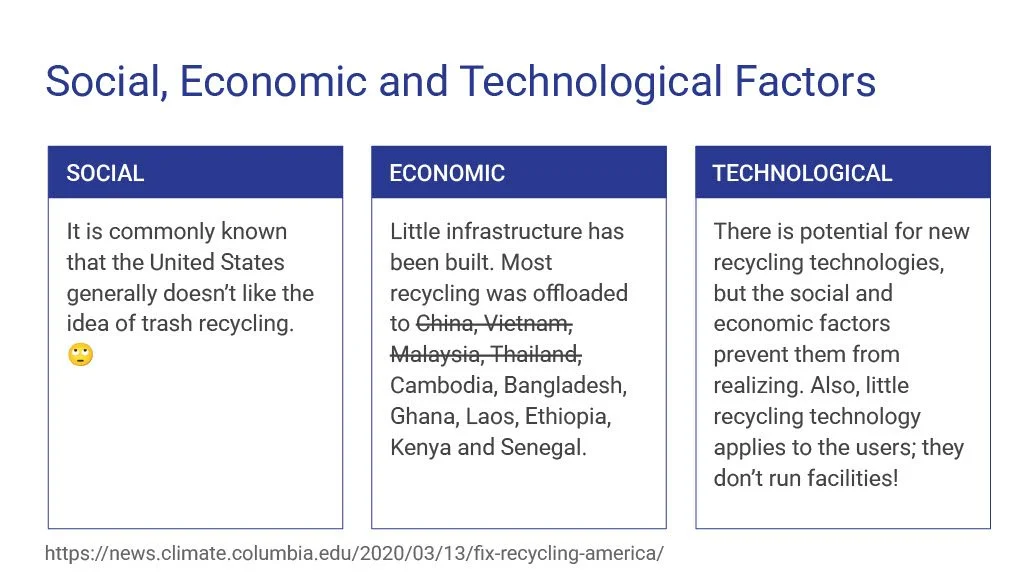
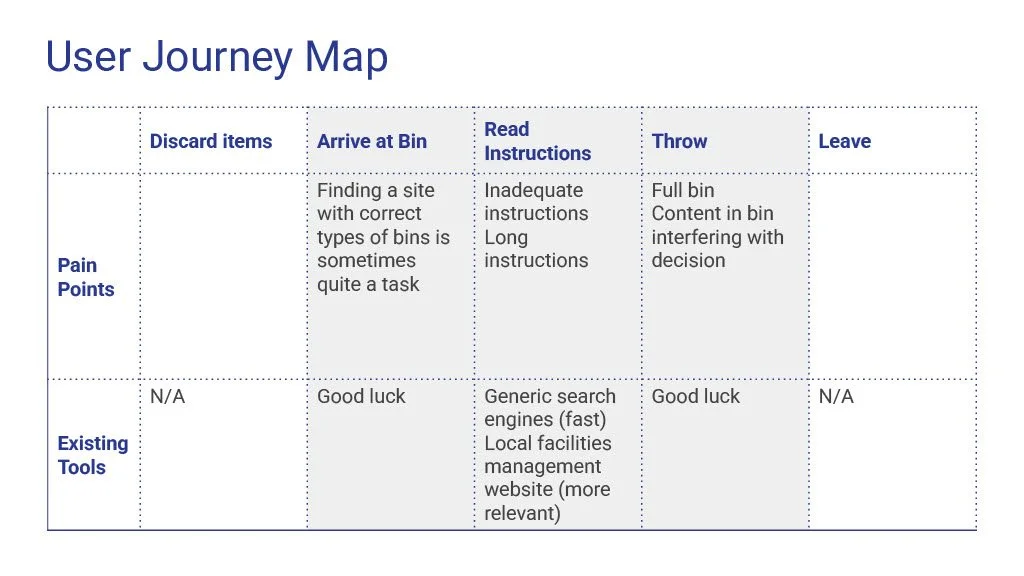
Choose a problem, conduct some basic online research, define a target user/persona, identify SET factors (social, economic, technological), form a problem hypothesis, frame a problem statement (pov), frame a vision statement, create a user journey map, set up a research plan (who, where, and how we’ll observe, interview, and survey people as well as what questions we’ll ask), start observations and interviews, analyze collected data, and create a project presentation.
Persona
College student in a dorm on campus, works several days a week and keeps in touch with friends and family, is healthy and active, frequently uses the internet/social media, has very little extra income, and pays for school through their savings and scholarships/grants.
Problem Statement
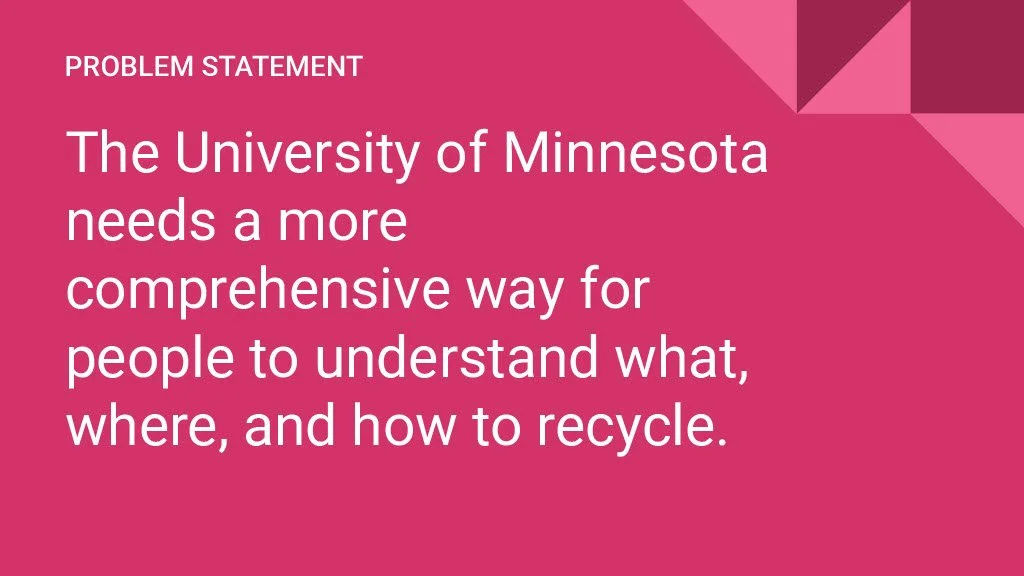
The University of Minnesota needs a more comprehensive way for people to understand what, where, and how to recycle.
Vision statement
For college students, iDunno provides a quick and convenient way to understand what, where, and how to recycle. In contrast, there is currently no widely known resource for this information.
In a nutshell:
Know where, what, and how to recycle.
Going from Research to ideation:
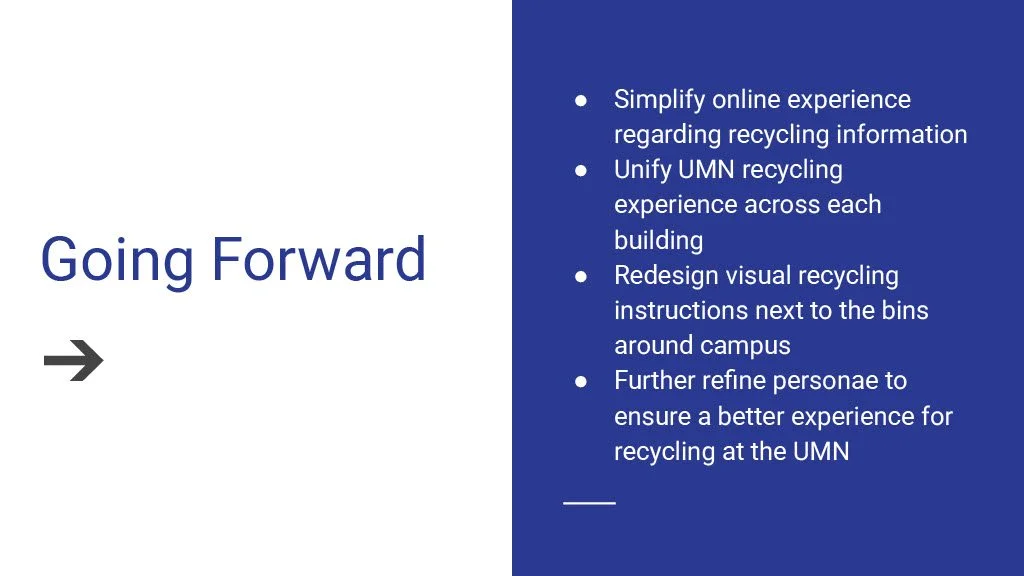
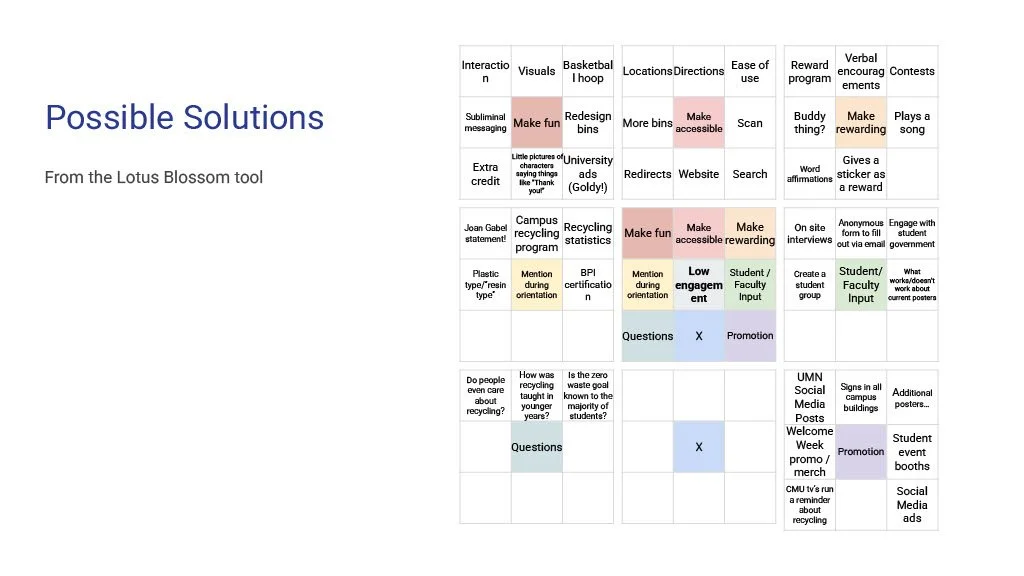
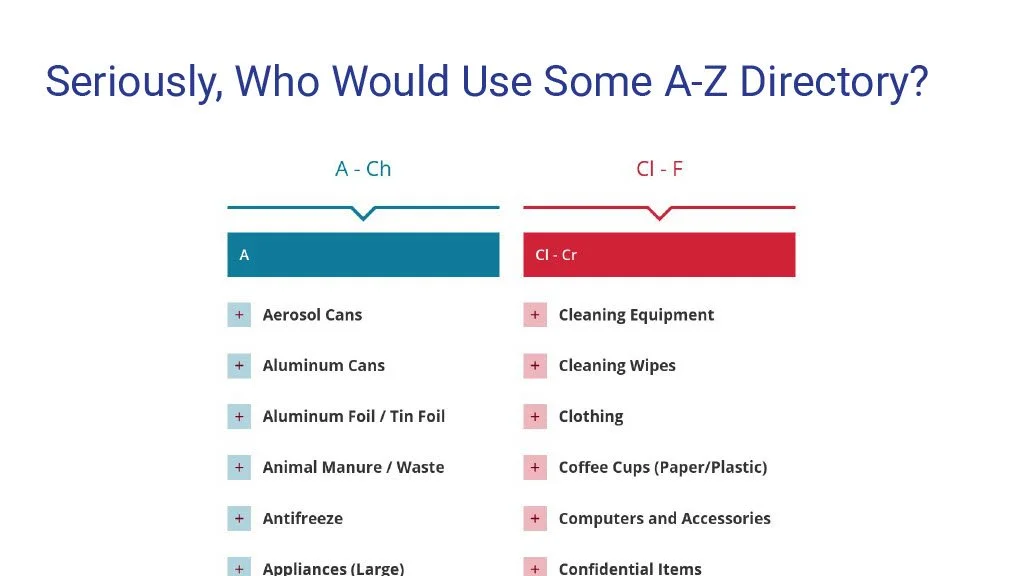
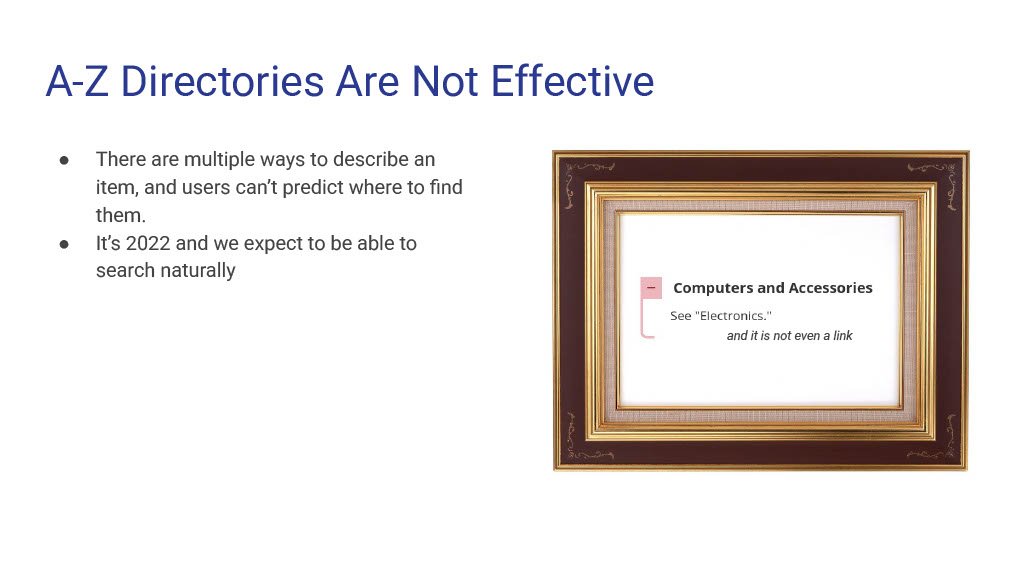
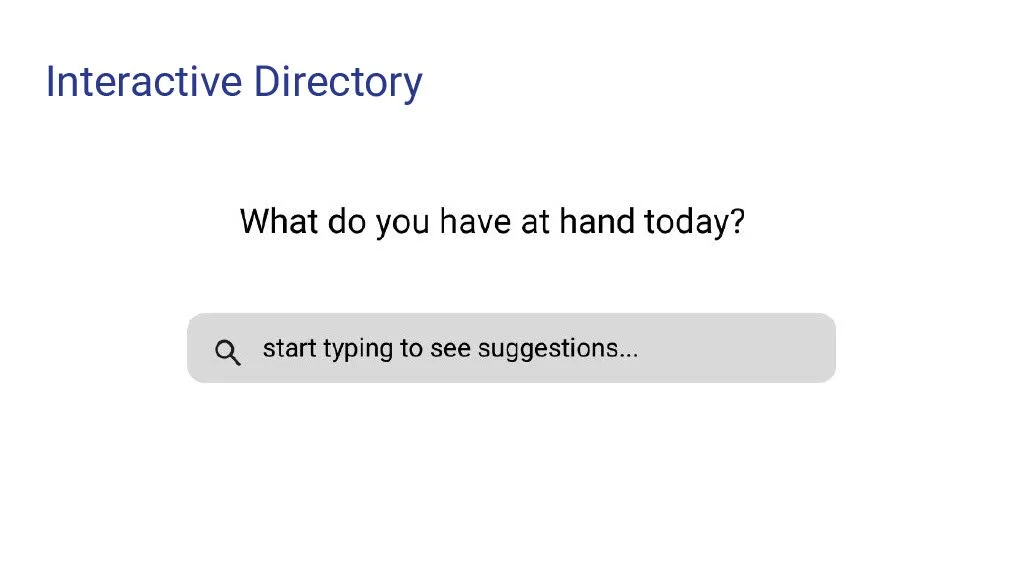
Simplify the online experience regarding recycling information
Unify the UMN recycling experience across each building
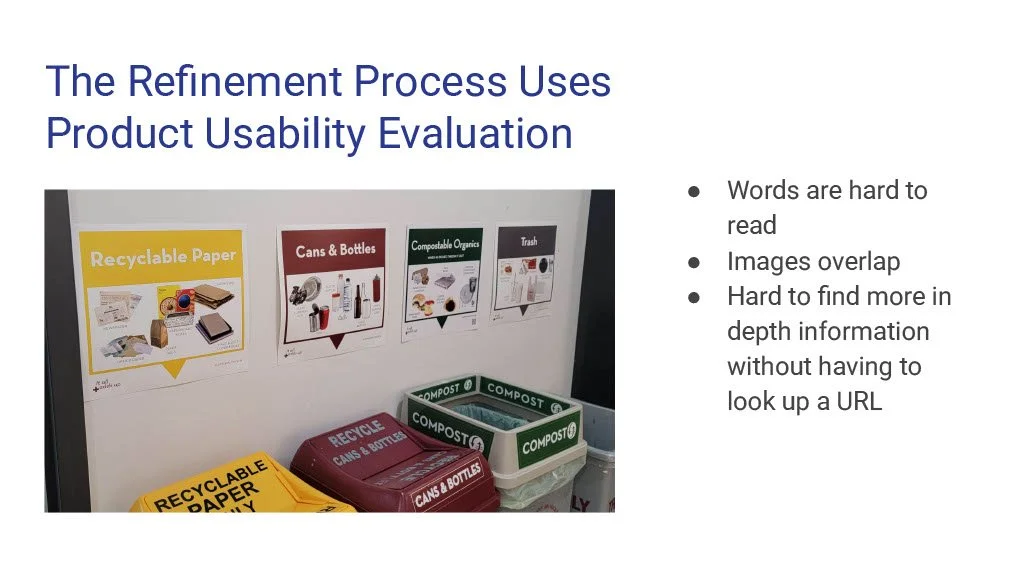
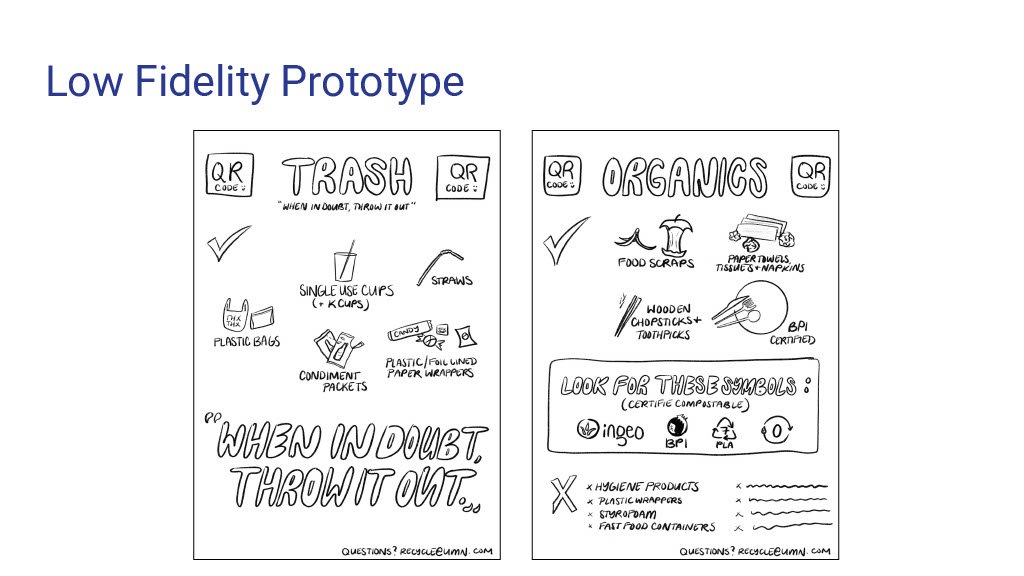
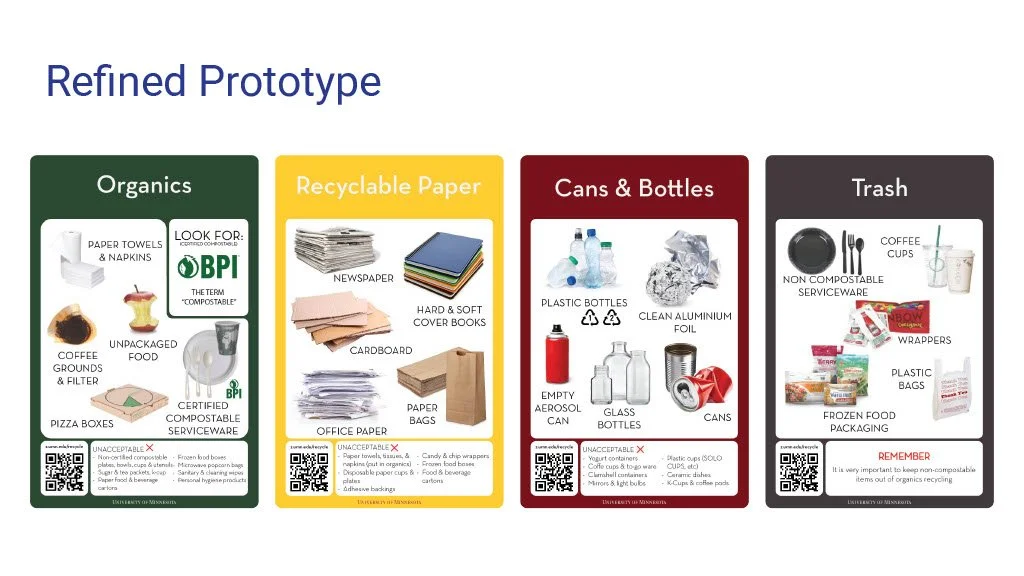
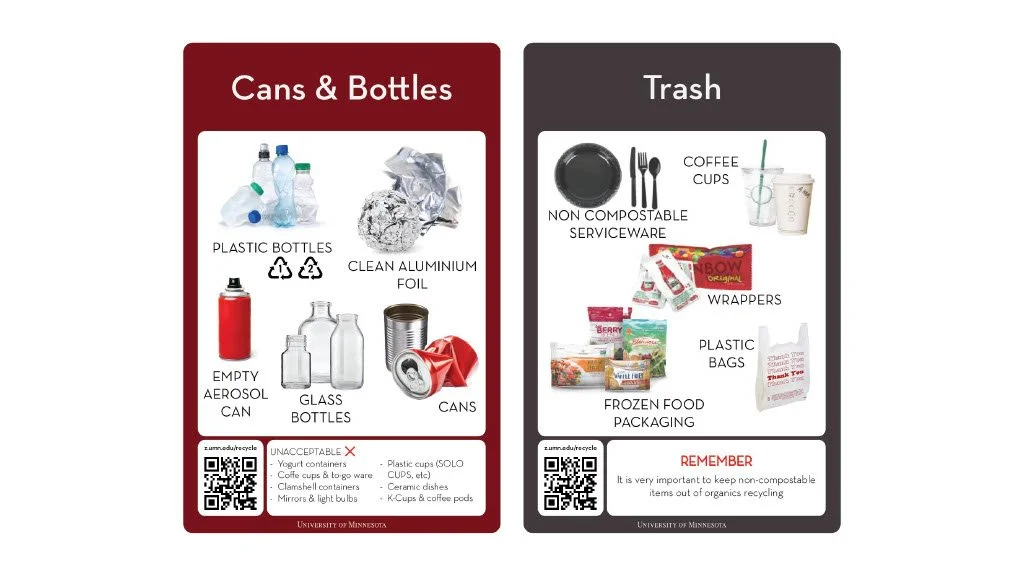
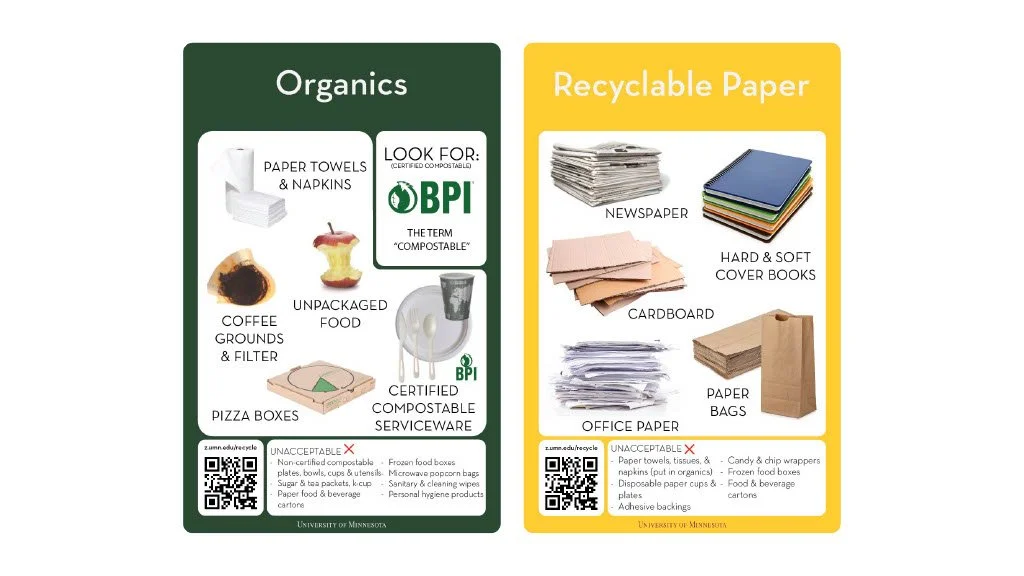
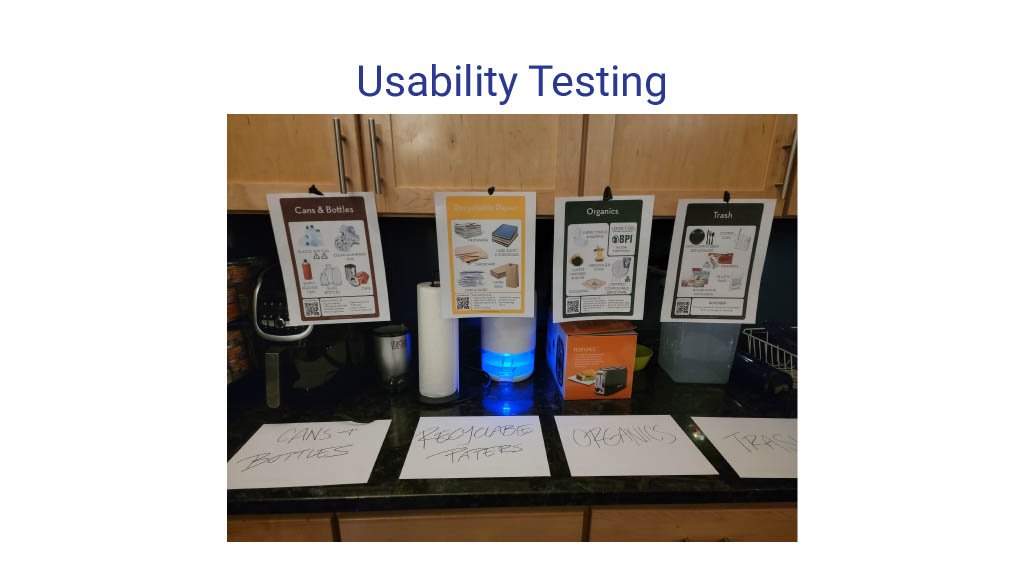
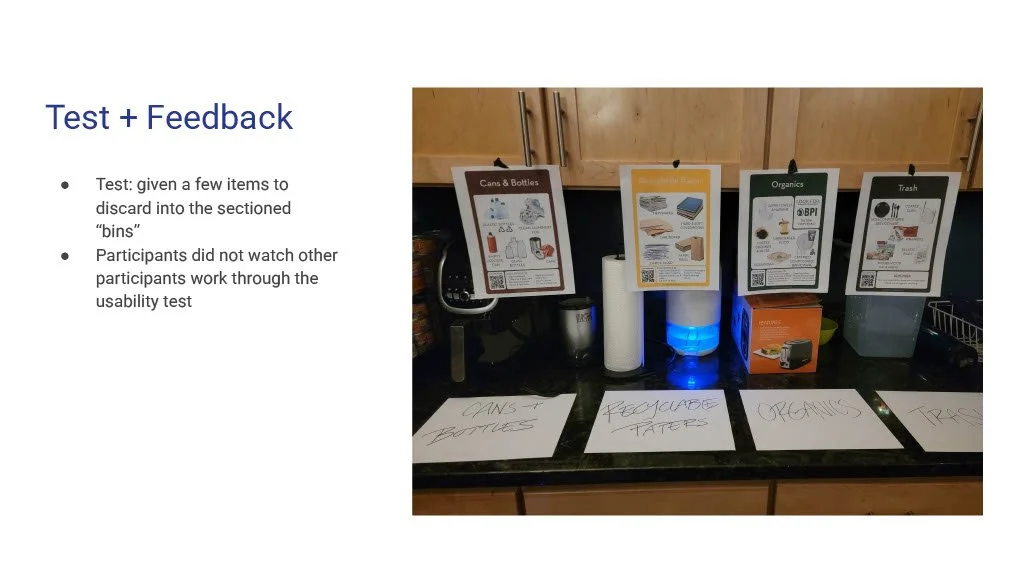
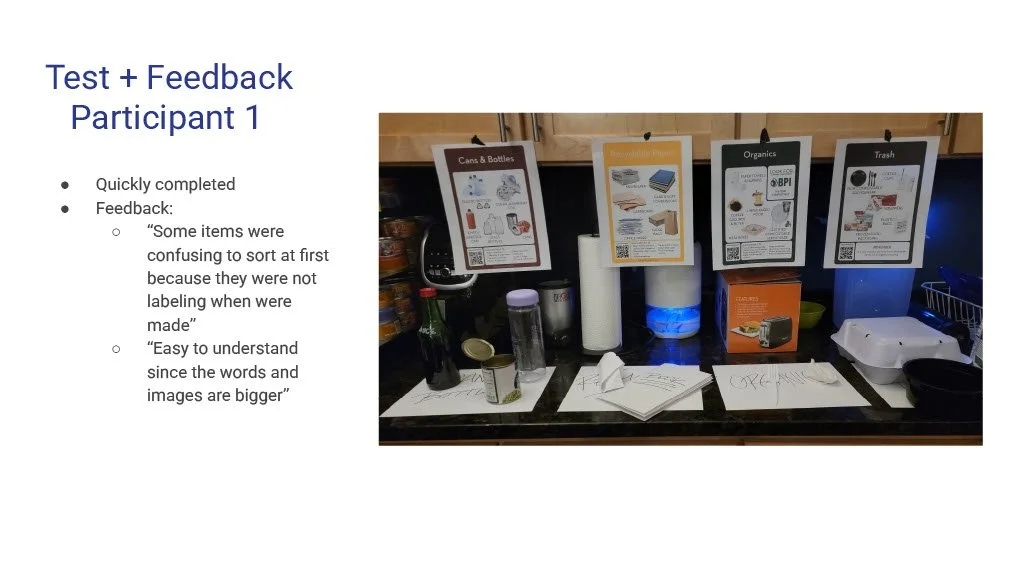
Redesign visual recycling instructions next to the bins around campus
Further refine personae to ensure a better experience for recycling at the UMN
The Main Resource Reference:
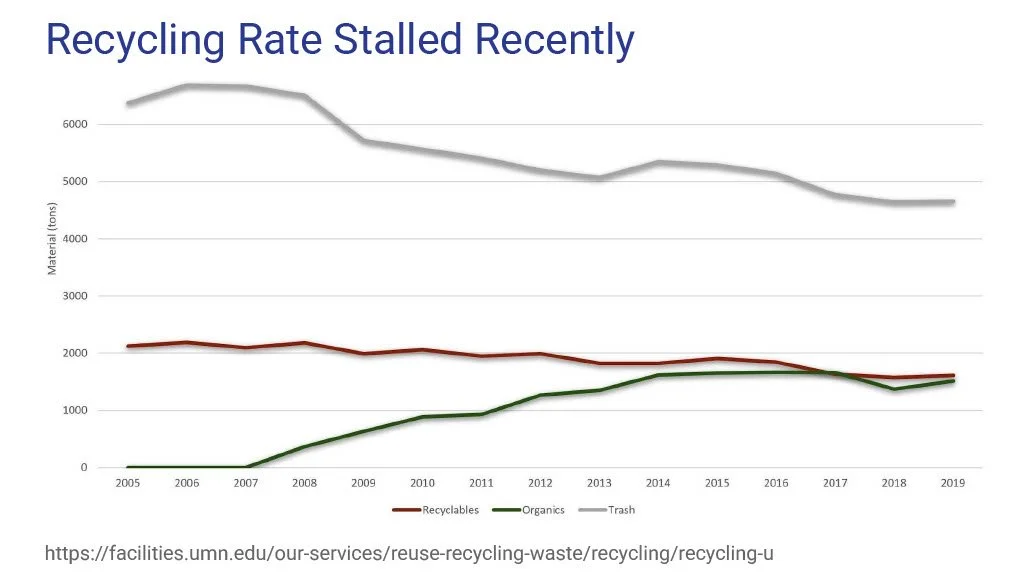
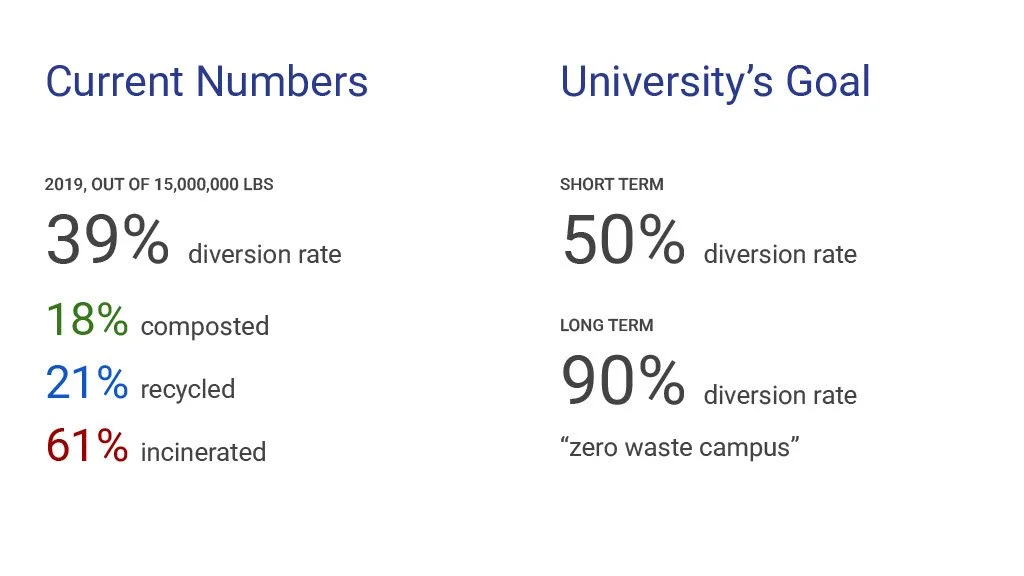
https://facilities.umn.edu/our-services/reuse-recycling-waste/recycling/recycling-u
Research phase presentation






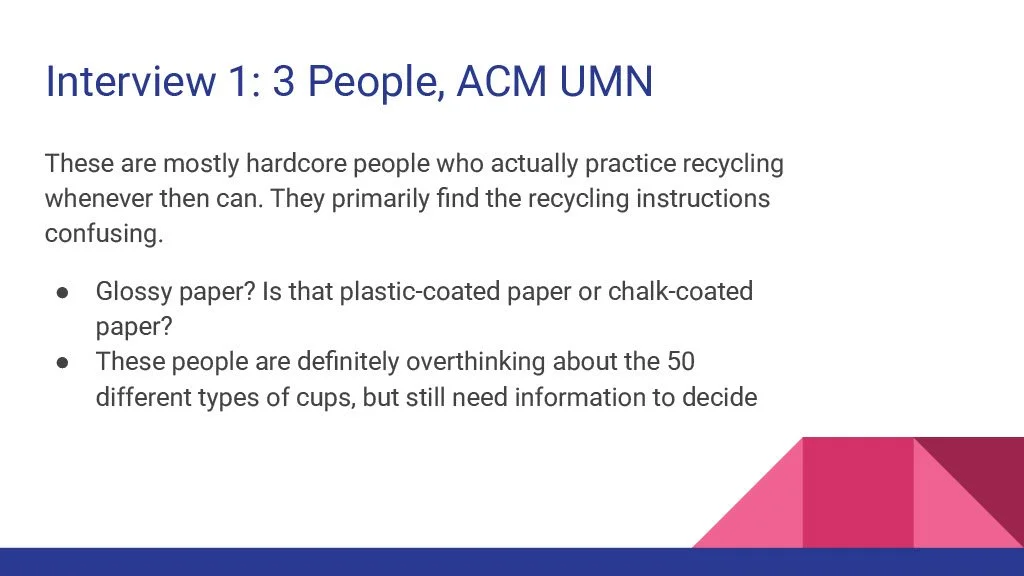
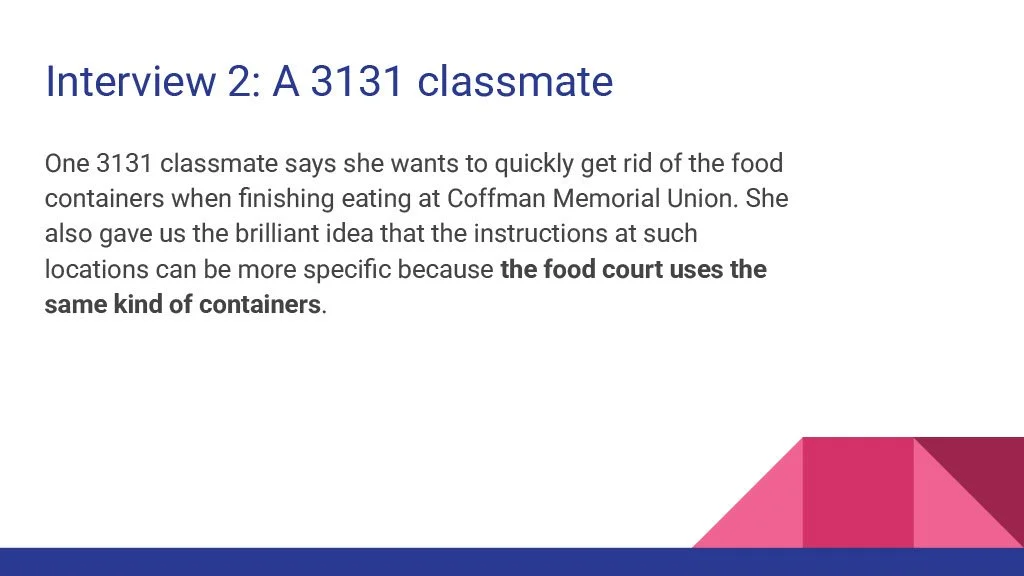

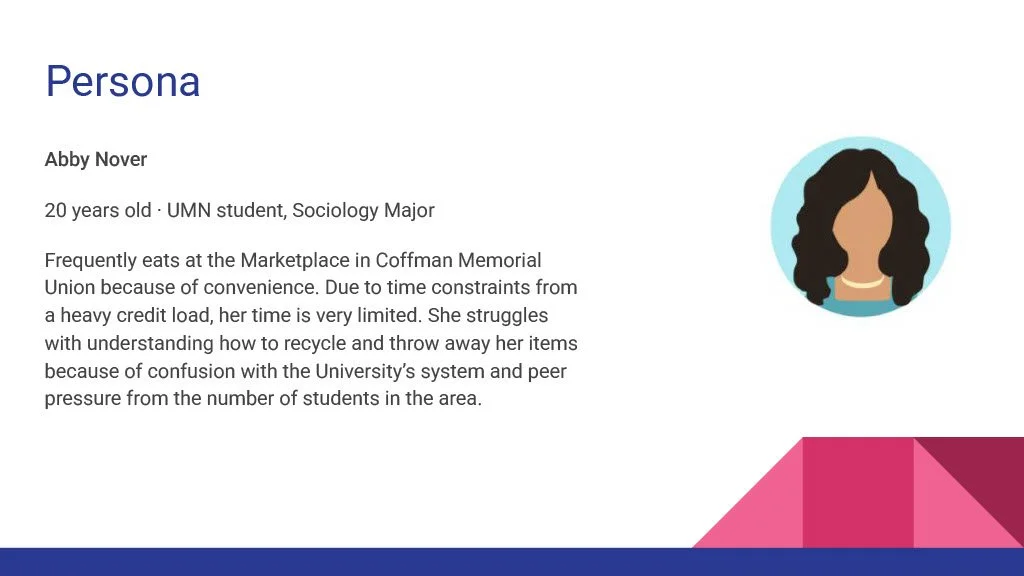

Ideation phase presentation
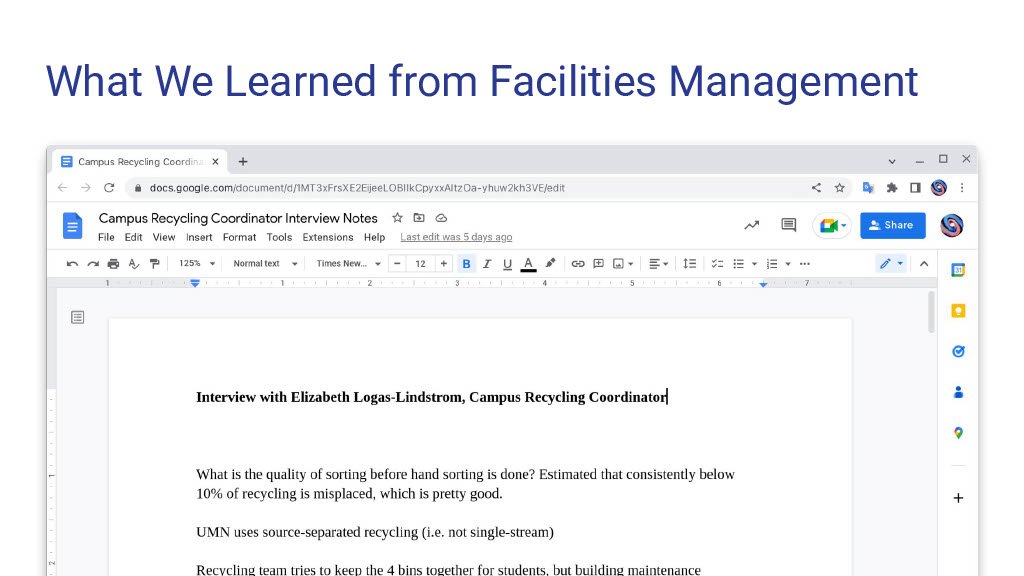





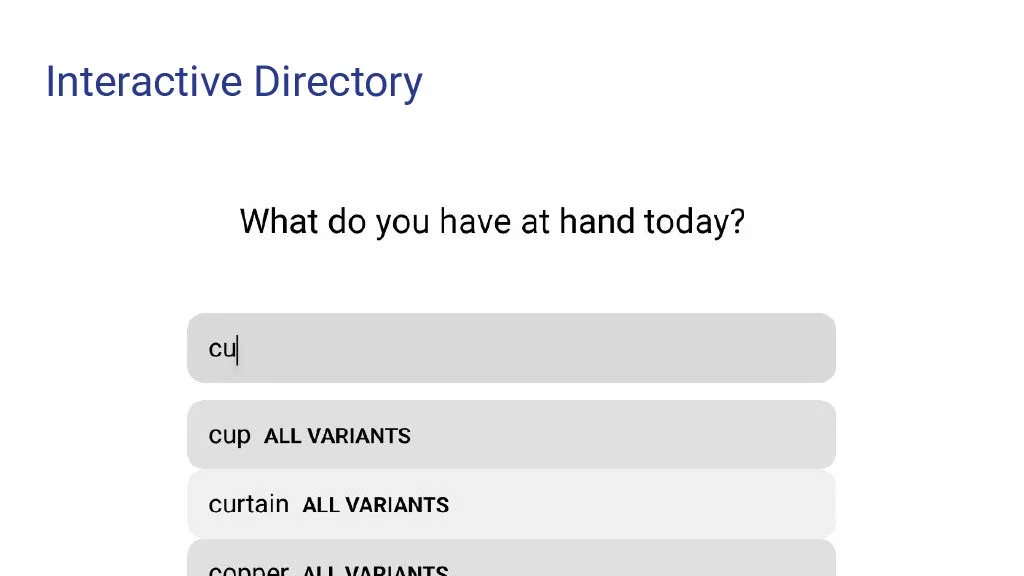
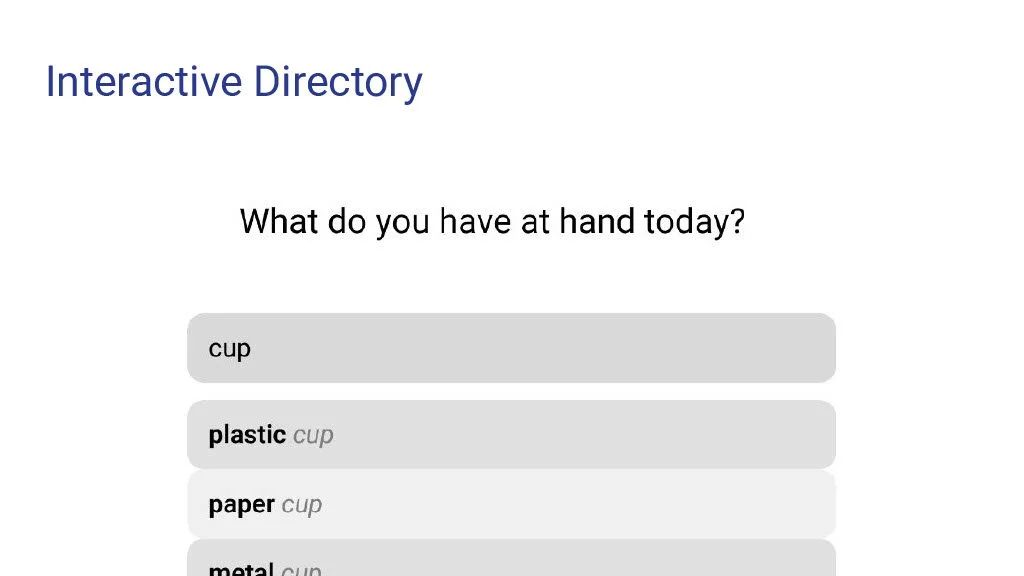
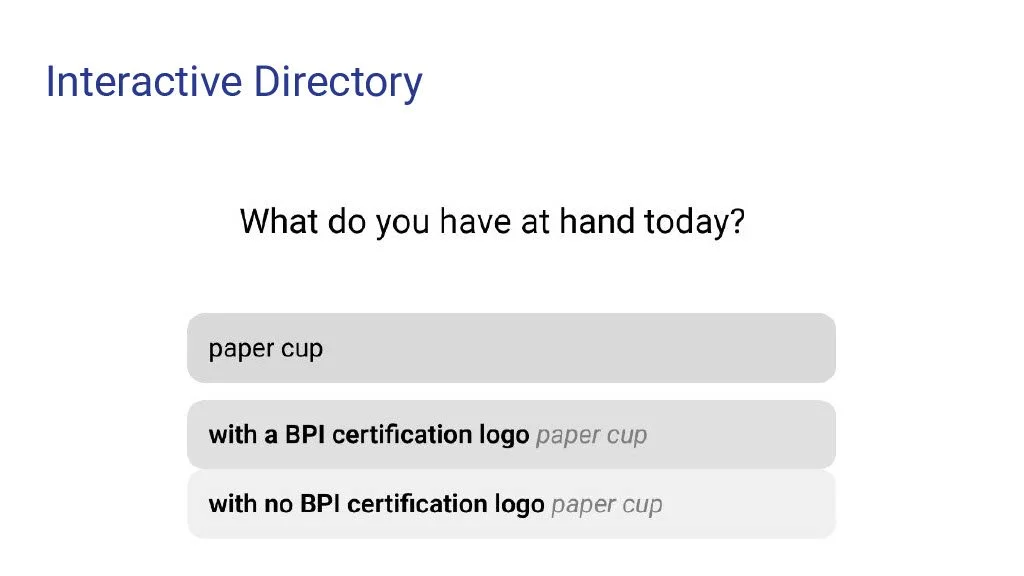
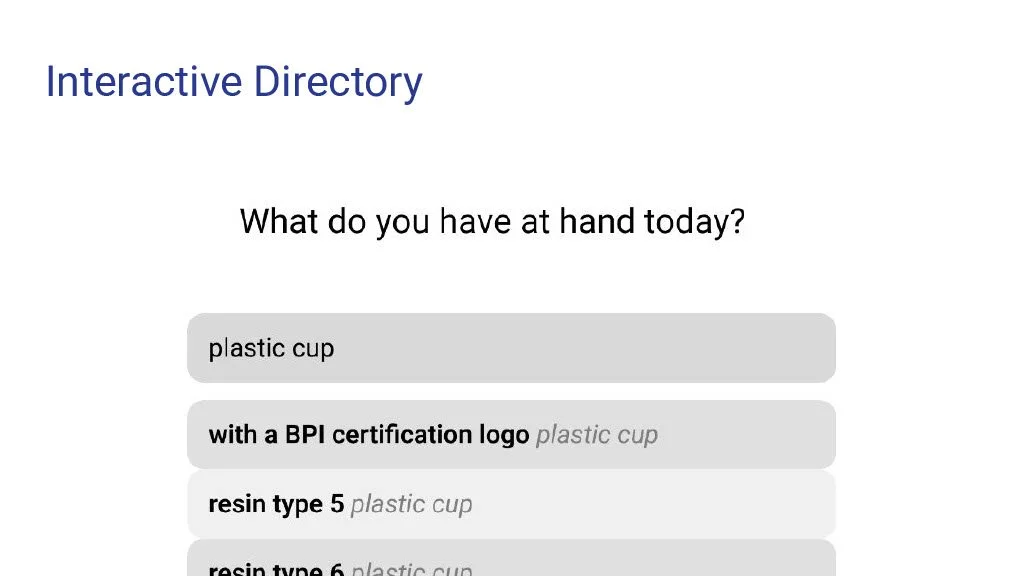

Interview with Elizabeth Logas-Lindstrom, Campus Recycling Coordinator
What is the quality of sorting before hand sorting is done?
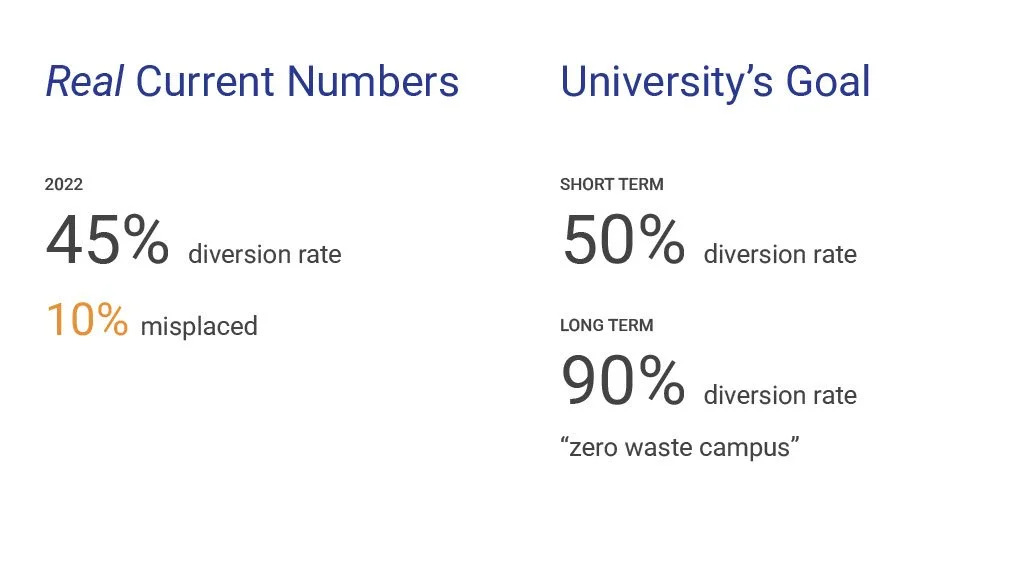
“It is estimated that consistently below 10% of recycling is misplaced, which is pretty good.”
UMN uses source-separated recycling (i.e., not single-stream)
The recycling team tries to keep the 4 bins together for students, but building maintenance sometimes misplaces them.
Their goal with recycling is participation
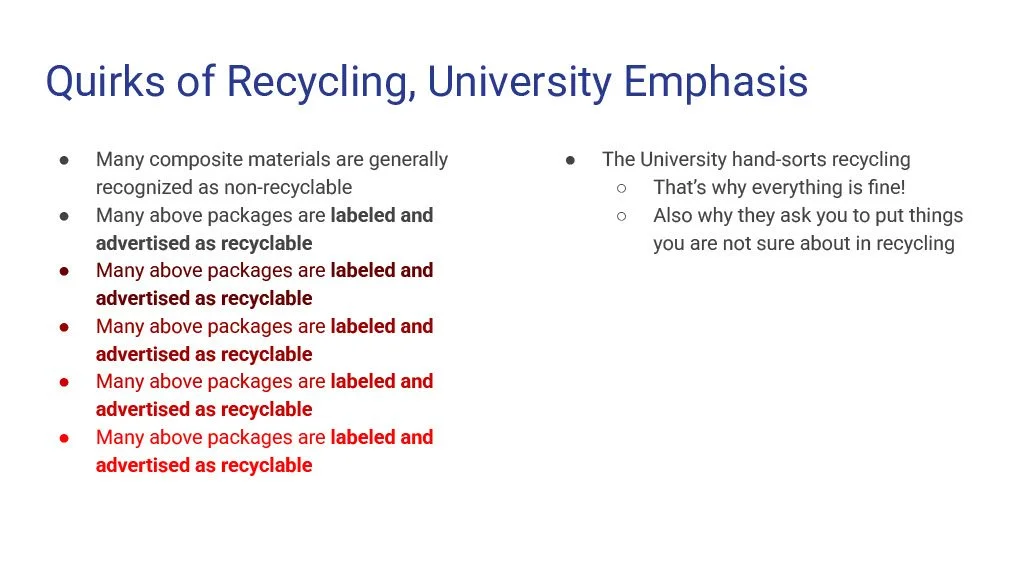
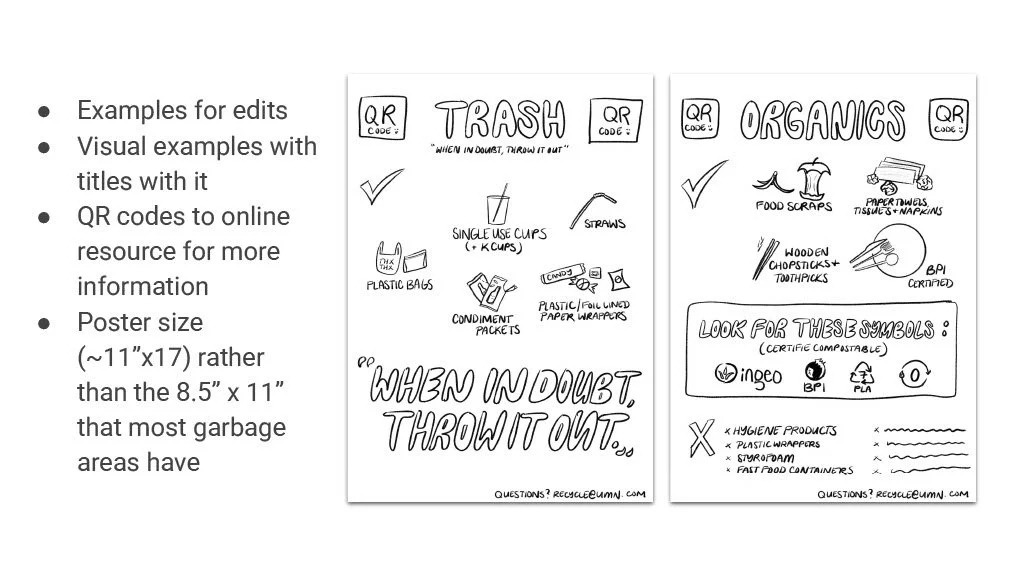
Many bigger recycling facilities use “when in doubt, throw it out” (in trash). The UMN recycling team would rather use “if in doubt (about whether something is recycling or trash), put it in recycling” because they hand sort it in the end.
In contrast, the compost stream needs to be clean. When in doubt with composting, throw it out, because UMN does not sort it.
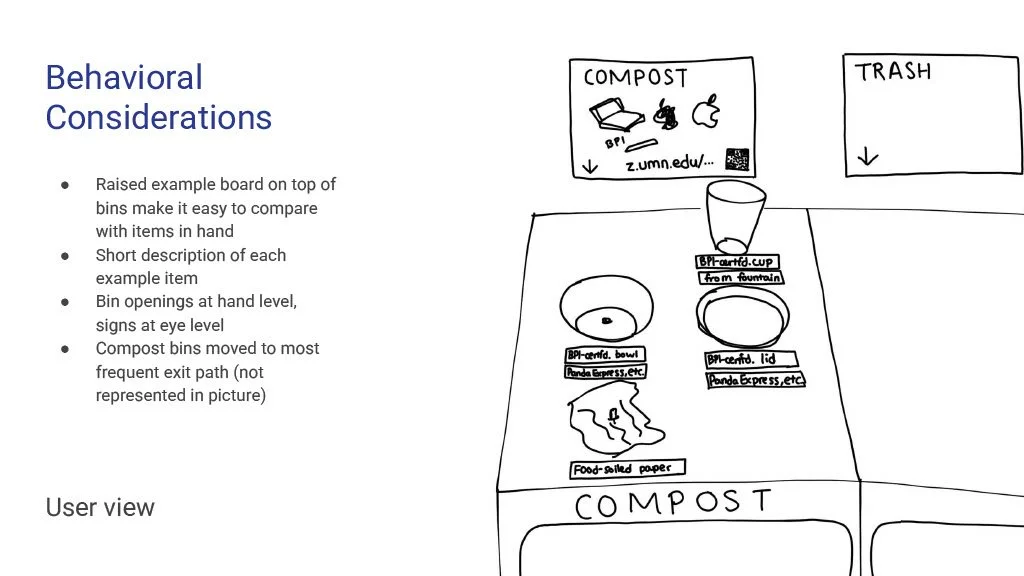
Compost is hard because UMN composting only wants BPI-certified stuff. Sometimes, stuff can say compostable when it actually isn’t. People will frequently put stuff in compost that isn’t because they want to compost, but it needs to be BPI certified, not just compostable
For example, at different Starbucks, there is a BPI certification on cups (likely compostable). Still, other Starbucks cups nearby or other components like lids are not compostable, so there is obvious confusion.
There needs to be reliable BPI certification on- and off-campus.
There are many stand-alone trash bins on campus, but there shouldn’t be. There are disposable antibacterial wipes and similar cleaning materials in many classes since COVID, so many classrooms have small stand-alone trash bins near their doors, so everything from that classroom, including recycling and compost, usually goes in there instead. Classrooms could be a good place for signs to redirect to the correct bins nearby.
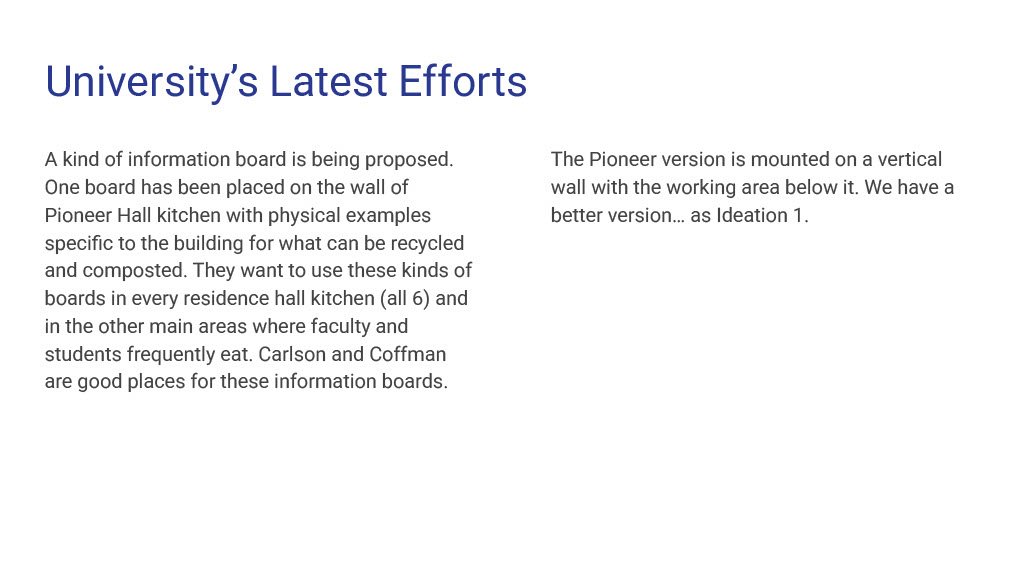
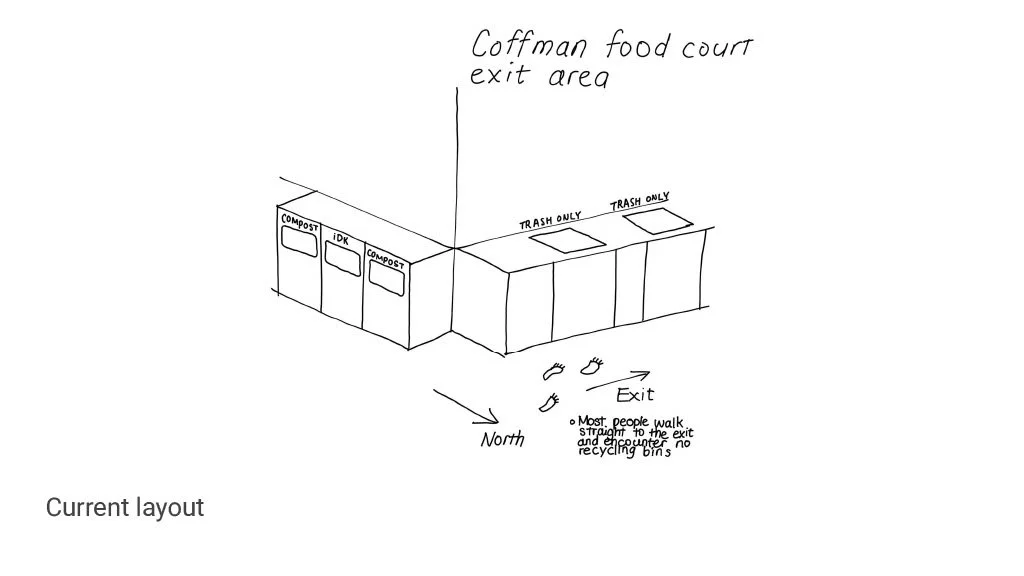
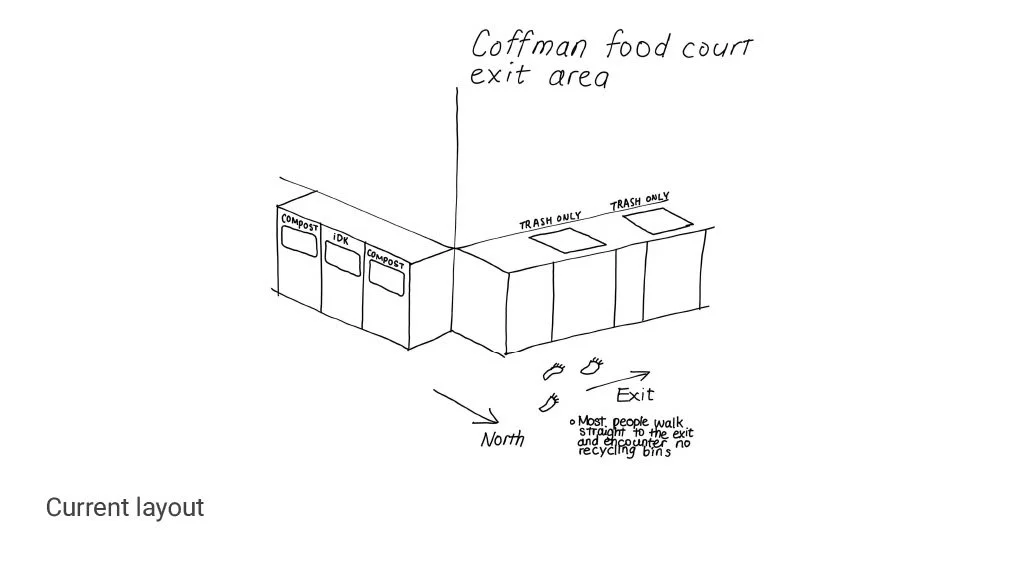
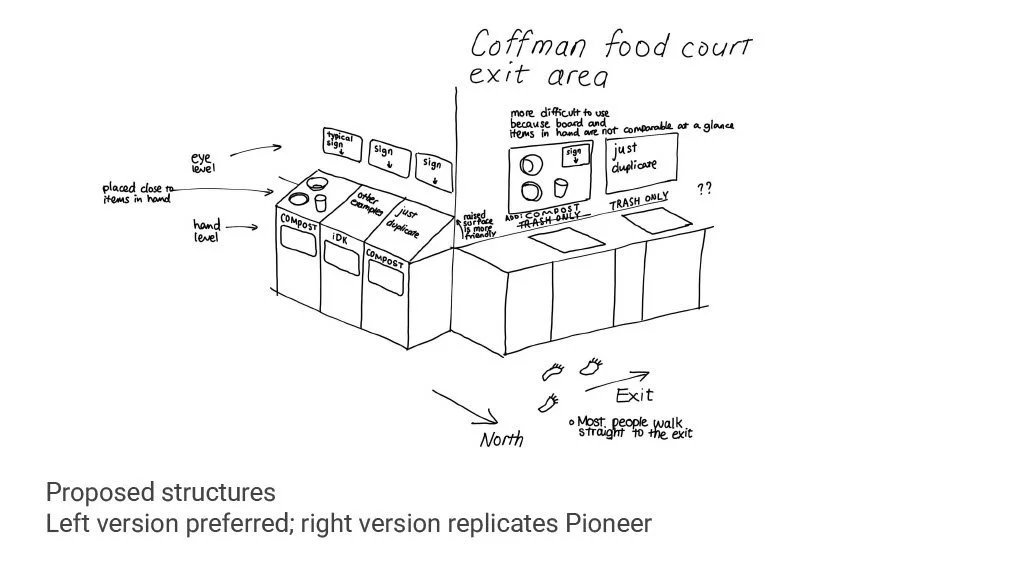
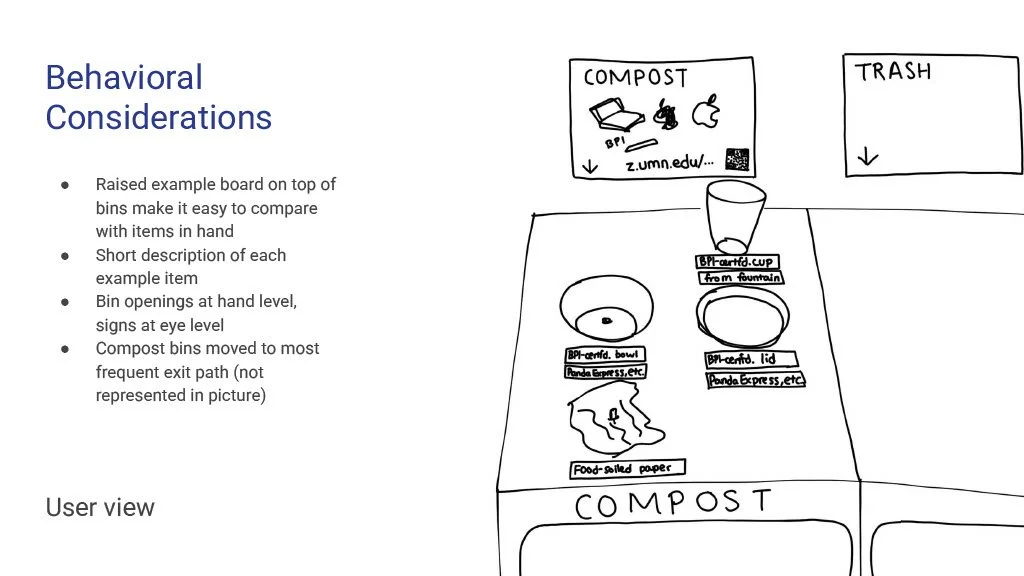
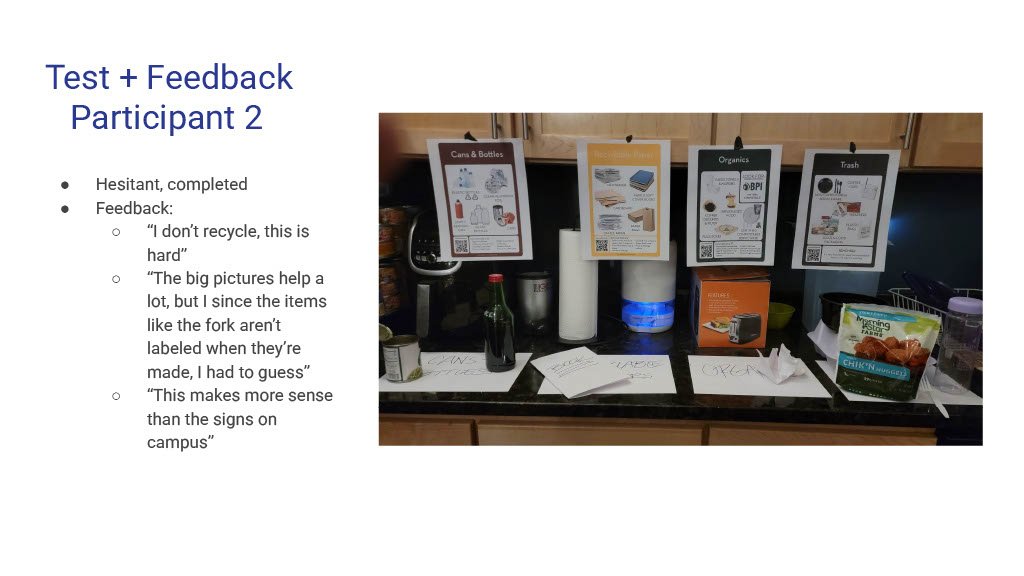
Boards have been placed on the walls of Pioneer Hall kitchen with physical examples specific to the building for what can be recycled and composted. They want to use these kinds of boards in every residence hall kitchen (all 6) and in the other main areas where faculty and students frequently eat. Carlson or Coffman could be a good place for the example boards.
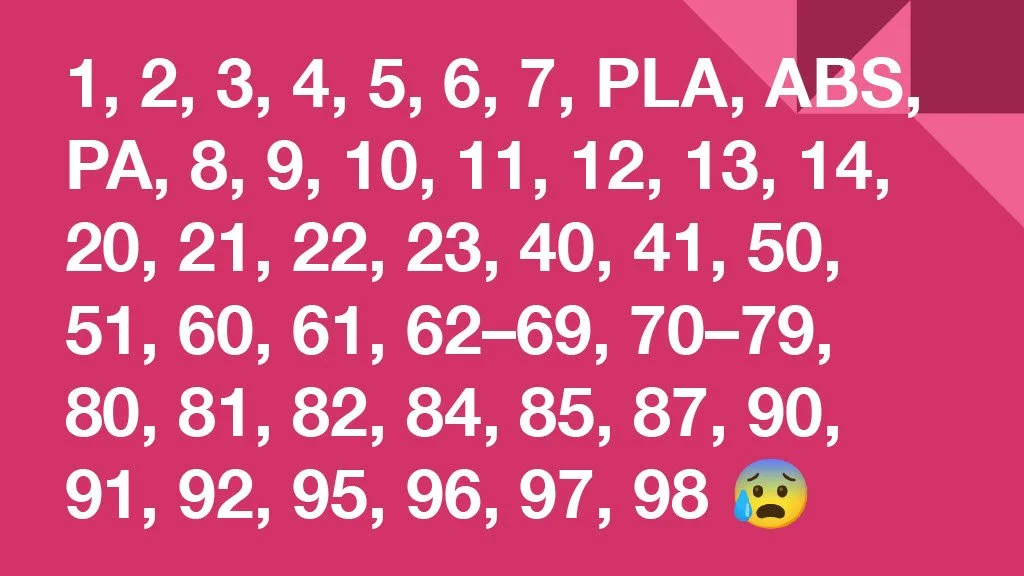
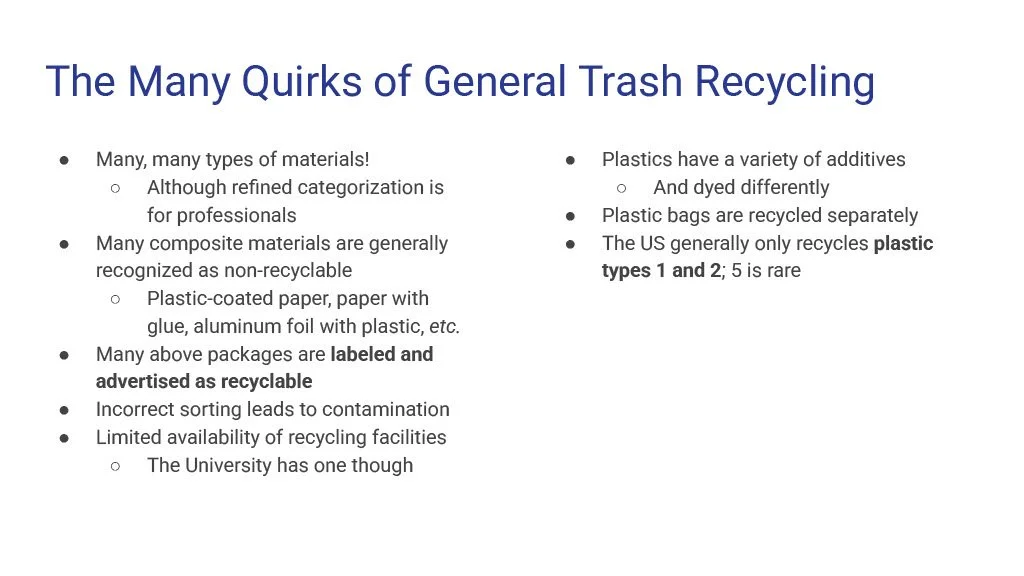
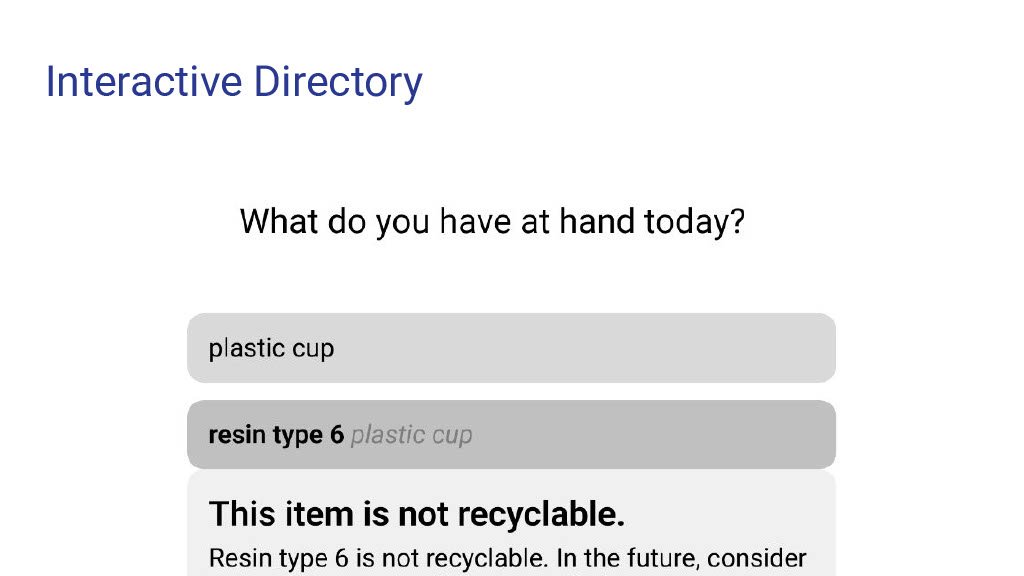
The small recycling sign on an item (also known as the resin code) doesn’t tell if something is recyclable, but what material it is. It also doesn’t tell what quality the material is. Recycling is determined by materials and economics, not the state. If there is a recycling market, it can be recycled, and if there isn’t, then it can’t be recycled. Basically, if there is enough material in the area and it is economically viable to recycle it, it can be recycled. Yogurt containers/cups (usually #5 and lower grade) are examples. Since the city of Minneapolis has so many yogurt cups, they can be recycled. But on campus, there are not enough yogurt cups being made and used for there to be a viable recycling market for them
They want recycling to be 100% reliable, so they are trying to be clear about what is being recycled and what is recyclable for people. This is because some people are unsure about whether their recycling is actually making an impact and if their materials are being correctly recycled anyway.
UMN has its own recycling trucks and would have to have a contract with Eureka, the Minneapolis recycling company, to haul its waste instead of managing it all internally. Amazon packaging/padding paper is not recyclable (because of the non-cellulose-based glue and padding material that it comes in contact with). They have contacted Amazon about changing it since no one, or nearly no one, in Minnesota has a market for recycling it, so it currently goes in the trash. (Not sure what material the current version is using.)
Certain requirements need to be met to get a recyclable symbol for a material. Normal paper magazines with a metal staple can be recycled. Small contaminants like staples are pulled out in the pulping process at a recycling mill. Photo paper can be recycled, but sticker paper cannot be and must be trashed because of the glossy plastic backing. Certain recycling issues come up when small pieces of one material are mixed in with another material, because they use source-separated recycling.
Composting sites are concerned about fluorinated chemicals in the materials. Some “compostable” items have been tested and correctly composted in a certain amount of time (several weeks or months), but without BPI certification, they don’t know if something has fluorinated chemicals or not. Chalk-coated paper is recyclable.
Certain recycling issues come up when small pieces of one material are mixed in with another material, because they use source-separated recycling.
Refinement phase presentation




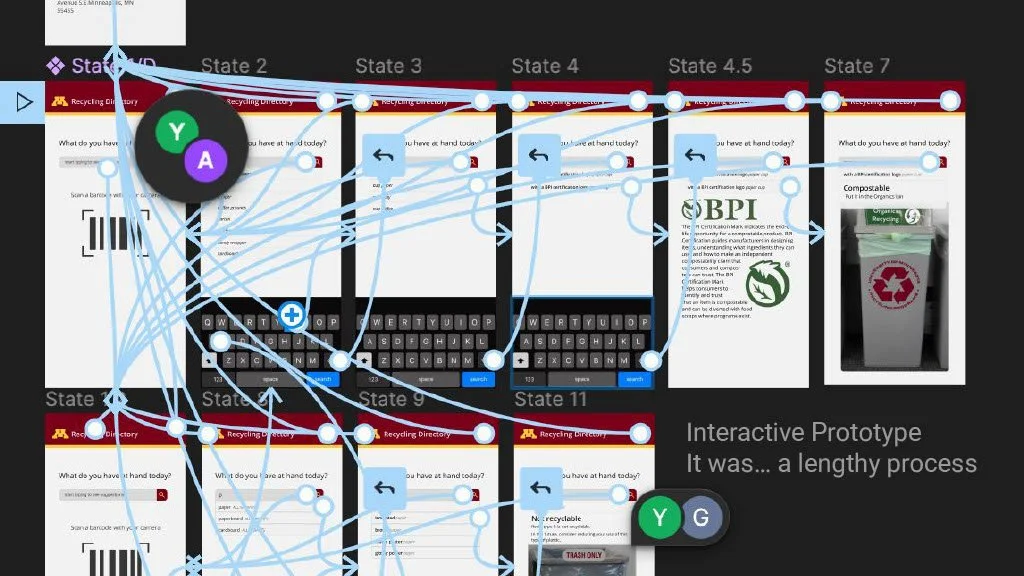
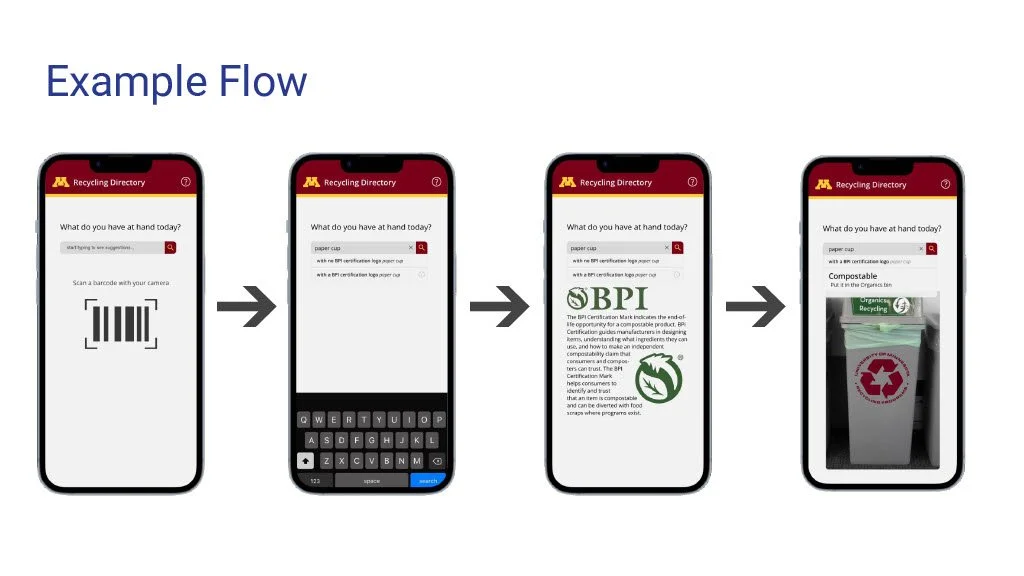

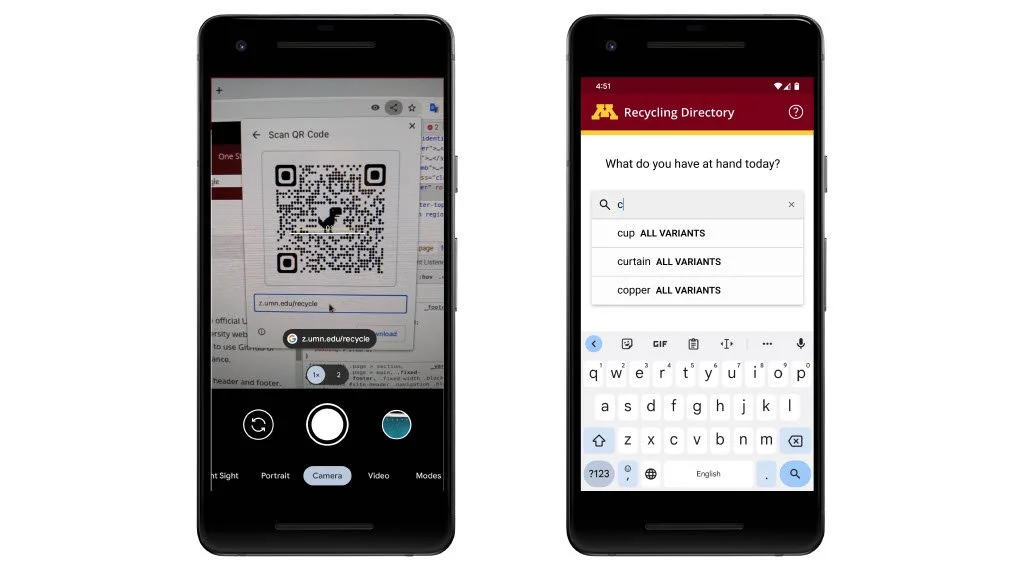



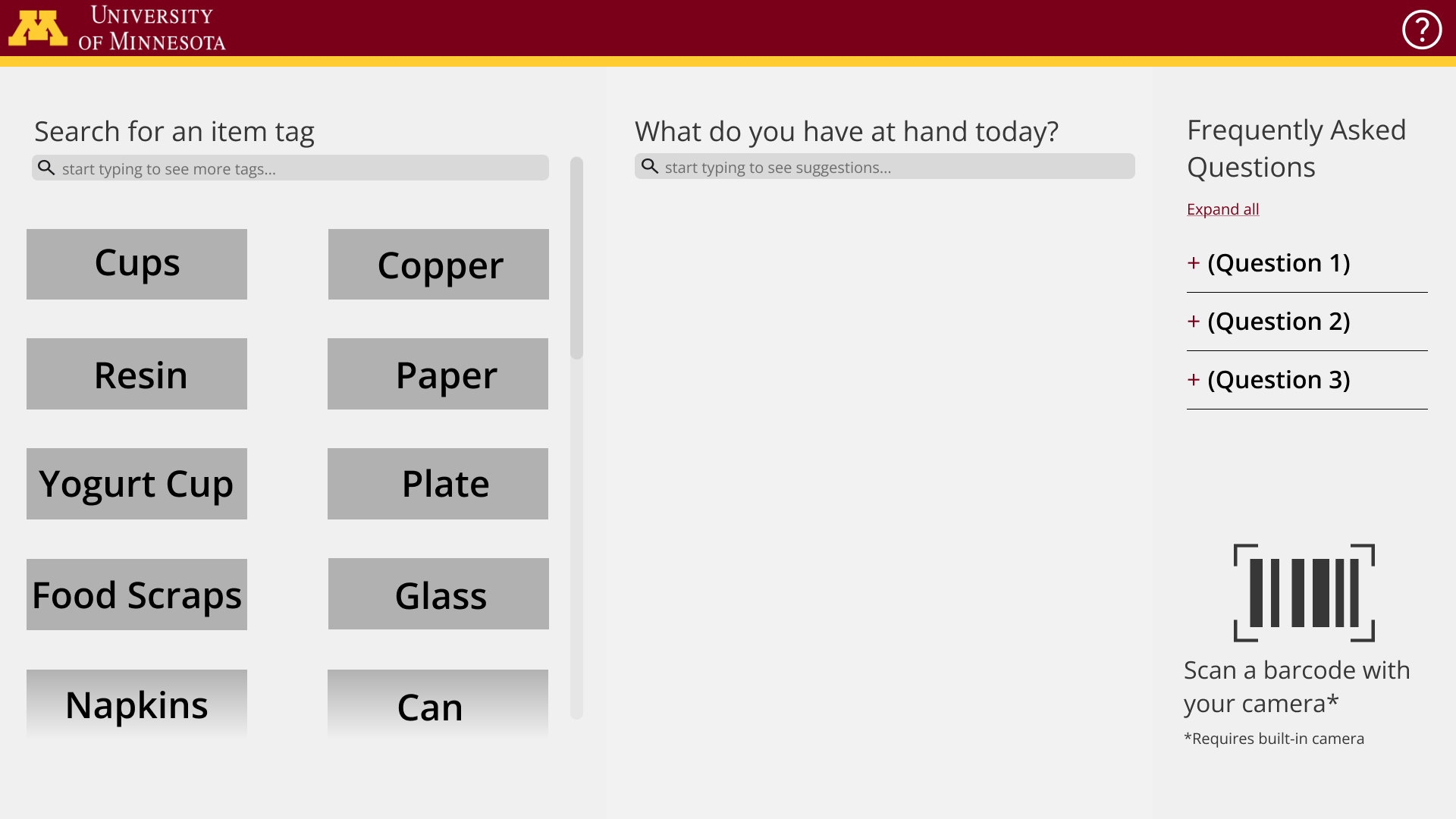
Website Prototype
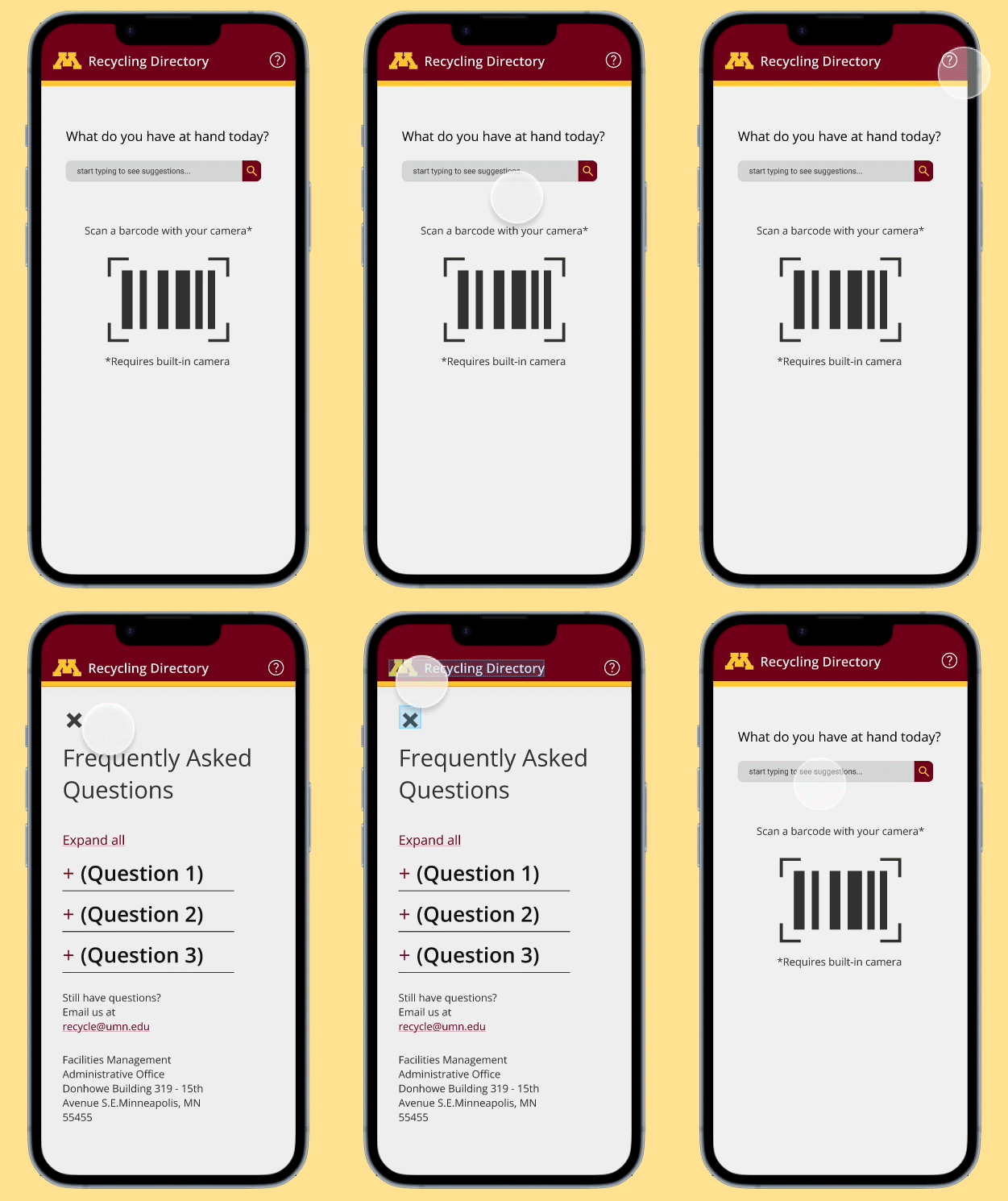
Try out the Prototype!